
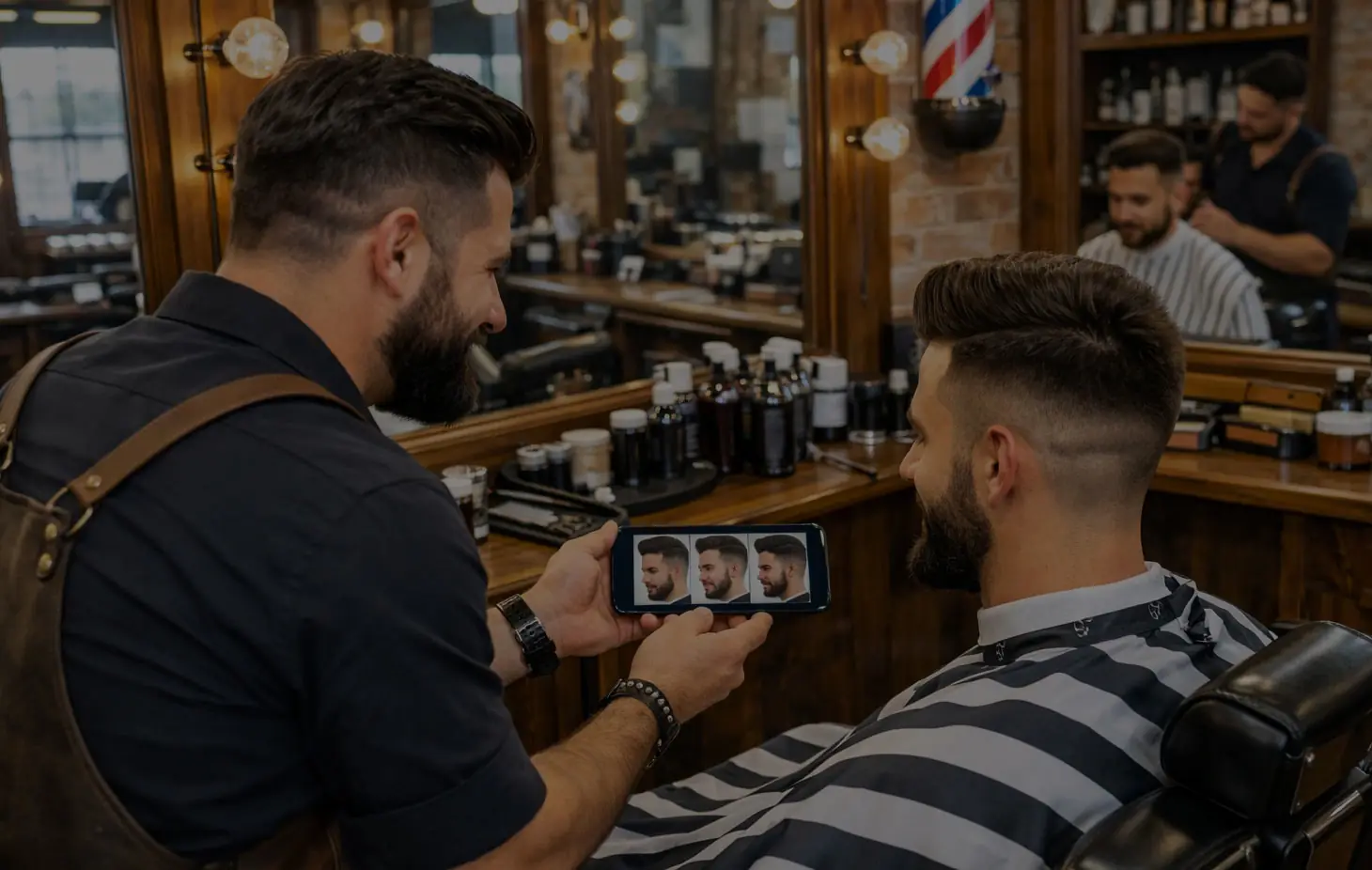

“What will suit me?” is the most common question in any chair. Face shape isn’t the only answer — hair type, density, growth patterns and lifestyle matter too — but it’s the best place to start the conversation.
How to read a face shape
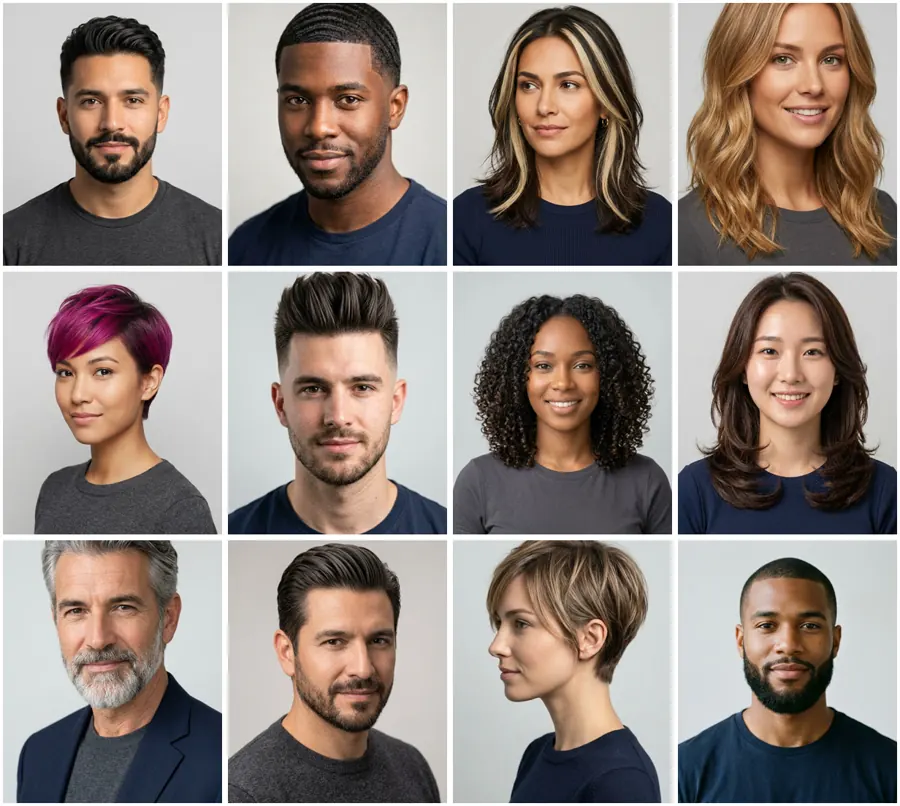
Look at three things: the width of the forehead, cheekbones and jaw, and the length of the face compared with its width. Pull the hair back, stand square in front of the mirror, and compare.
Oval
Balanced proportions, slightly longer than wide. Almost anything works — the safest face to experiment with. Watch heavy fringes that hide the balance.
Round
Width and length are similar, with soft angles. Add height and structure: quiffs, pompadours, textured crops with short sides, long layers that fall below the chin. Avoid wide, full sides.
Square
Strong jaw and forehead. Classic cuts — crew cuts, side parts, undercuts — suit the angles. For a softer look, add texture and length on top.
Heart
Wider forehead, narrower chin. Medium length and side-swept fringes balance it; chin-length bobs and fuller lower layers add width at the jaw.
Long
Length clearly greater than width. Keep height down and add width: fringes, fuller sides, waves. Avoid very tall styles.
Face shape is only half the story
- Hair type — straight, wavy, curly or coily hair behaves very differently in the same cut
- Current length — some looks simply need more growth first
- Beard — a beard can square a round face or soften a strong jaw
- Maintenance — a skin fade every two weeks isn’t for everyone
Show, don’t describe
Even with a good read, describing a cut leaves room for misunderstanding. TrueStyleAI reads face shape, hair type, length and beard from three quick photos, recommends styles that suit and are achievable today, and previews each one on the customer’s own face — in 360° and before & after.
Want to see it in your salon? Start a free 30-day trial with 10 AI previews, or book a demo.